
As society tends to revolve around rapid changes, one traditional job with a nostalgic resonance is experiencing an unexpected transformation. Teenage babysitters, once a hallmark of American youth and family life, are seeing a dramatic shift in their earning potential and market dynamics. A recent report from UrbanSitter sheds light on just how much childcare salaries have evolved over the years, and it raises the question: Is the era of teenage babysitters becoming obsolete?
A Look at Current Babysitting Rates
According to UrbanSitter’s latest survey in 2026, babysitters across the United States are now earning an hourly wage ranging from $19 to $29. This is a stark contrast to the past when many teenagers remember earning a mere $5 an hour. The average hourly rate has reached $26.24 for one child, $29.87 for two children, and $32.33 for three, showcasing a significant increase in wage trends over the past decade.
Factors Influencing Rates
Several elements contribute to the variations in babysitting rates:
- Experience and Age: More experienced babysitters command higher pay.
- Geographic Location: Urban centers typically offer higher rates.
- Responsibilities: Additional duties such as preparing meals or assisting with schoolwork can influence the pay offered to sitters.
- Number of Children: The more children involved, the higher the cost.
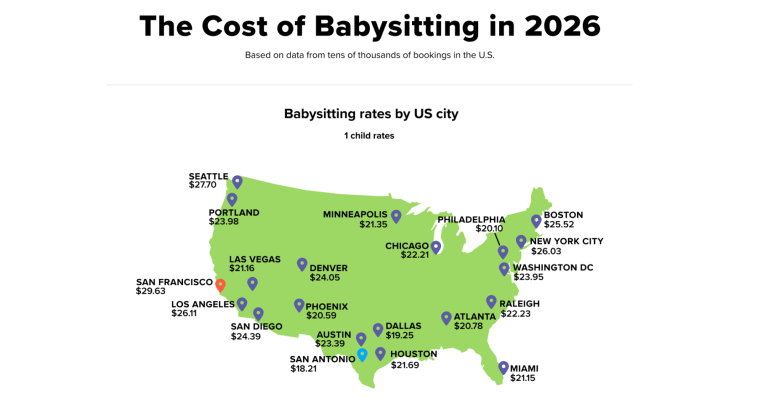
Urban areas such as San Francisco, Seattle, and Honolulu stand at the top of the chart as the cities offering the highest rates. Conversely, cities like San Antonio, Dallas/Ft. Worth, and Columbus, Ohio present more affordable options, indicating a stark regional disparity in childcare costs.
The Economic Context
This year marked a 4.9% increase in babysitting rates, which has outpaced the general inflation rate of 3%. Such trends reflect not only a change in the demand for babysitting services but also a growing recognition of the skills and responsibilities expected from individuals in this role.
Competitiveness in the job market for childcare has seen both parents and babysitters adjusting to new realities. As parents grapple with rising costs of living, many are willing to invest more in reliable babysitters who can meet their families' needs, reflecting a deeper relationship between economic conditions and the previously informal realm of babysitting.
Geographical Breakdown of Babysitting Rates
The varying rates reflect regional differences in pay. Parents evaluating babysitting expenses might find surprising data points valuable:
- Atlanta, GA: $20.78 (one child), $23.74 (two children)
- Miami, FL: $21.15 (one child), $26.56 (two children)
- Chicago, IL: $22.21 (one child), $25.83 (two children)
- Los Angeles, CA: $26.11 (one child), $29.22 (two children)
While the average prices fluctuate from one city to the next, parents can utilize this data to budget effectively and find competitively priced childcare in their respective locations.
The Future of Teenage Babysitters
Is the age of the teenage babysitter fading? As more families turn to formal childcare solutions, there’s a debate on the future of this rite of passage for many adolescents. With increased rates for professional sitters, traditional teen babysitting jobs may become less attractive to low-wage earners compared to alternatives like part-time jobs in retail or food service, which often offer steady hours and wages with more predictable income.
For parents seeking consistency and reliability, the tendency to hire experienced childcare professionals could potentially decrease opportunities for teenagers. Alternatively, this scenario might drive younger babysitters to focus on developing specific skills related to childcare that offer a competitive edge.
Conclusion
As babysitting evolves into a more lucrative, specialized profession, the iconic teenage babysitter might be at a crossroads. Rising wages and professional expectations could lead the way for a more structured approach to childcare, one where teenagers may either adapt and thrive or find themselves sidelined in favor of seasoned professionals.
The dynamics of babysitting in 2026 paint a complex portrait of change influenced by economic conditions, cultural shifts, and parental demand for quality care. Families will need to navigate this landscape, weighing costs against the trust and wellbeing of their children amidst these shifting tides.
For those interested in tracking babysitting rates what they may expect in their area, a comprehensive list is available through UrbanSitter here.
While the future is uncertain, one thing is clear: the role of babysitters—teenage or otherwise—remains vital in the fabric of family life as we know it.